Research & Development / Operational Applications

Research & Development / Operational Applications

Research & Development – ​​Operational Applications

Innovative technologies and advanced architectures of next-generation unmanned systems.

At By Linear Aerospace , Research and Development is a fundamental pillar of our technological and operational activity.
The technologies and architectures presented in this section concern existing and evolving applications, which have been designed and developed based on real operational needs.

Our activity focuses on autonomous flight, advanced hybrid propulsion, the exploitation of alternative energy solutions including hydrogen energy as well as the coordination of multiple unmanned platforms using advanced automation and artificial intelligence algorithms.

The Role of Research & Development

The ever-changing geostrategic reality, combined with the increasing demands on surveillance, crisis management, search and rescue, as well as sustainable operational solutions, require highly adaptable and reliable systems.

By Linear Aerospace systematically invests in applied research and development (R&D), aiming to improve, evolve and operationally exploit unmanned systems that offer increased autonomy, mission flexibility, interoperability and environmental responsibility.
By Linear Aerospace systematically invests in research and development (R&D), aiming to design future unmanned systems that offer increased autonomy, mission flexibility, interoperability and environmental responsibility.
Platforms & Operational Configurations

R&D activities include the design and development of multi-configurable unmanned aerial systems, capable of adapting to different operational scenarios.

The main categories of platforms include:

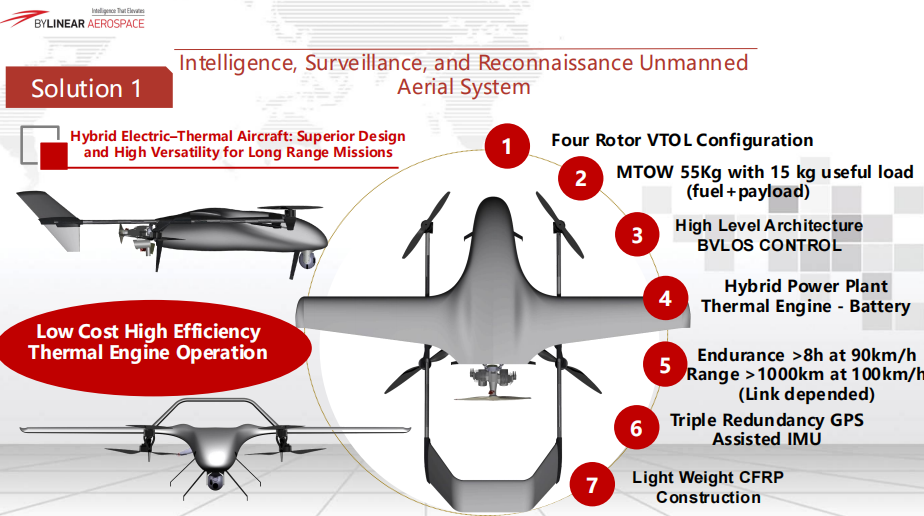
  • VTOL platforms with increased autonomy

  • Fixed-wing UAVs for long-range missions

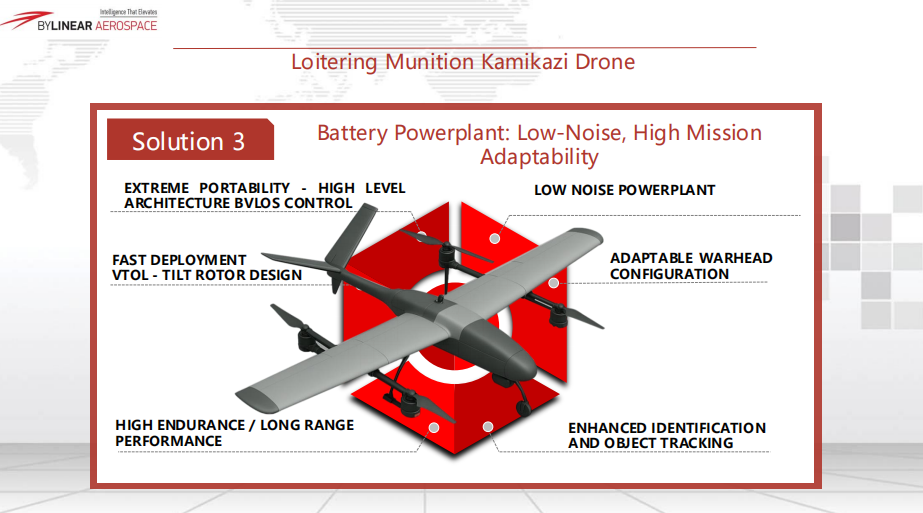
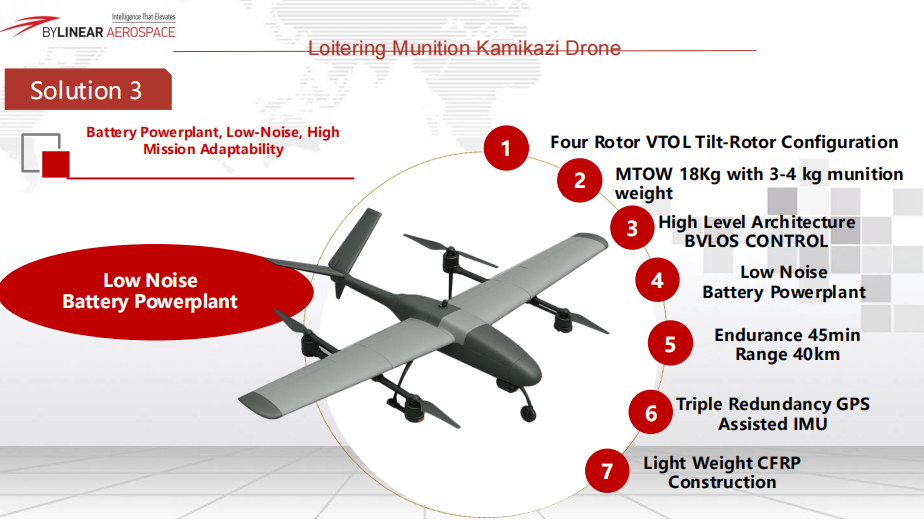
  • Loitering munition systems

  • Hybrid mission configurations with alternative payloads

Development Phase and Prototype Construction

All BLA X SERIES UAVs are the result of intensive research and development, based on advanced engineering design and innovative manufacturing methods. The development program includes:

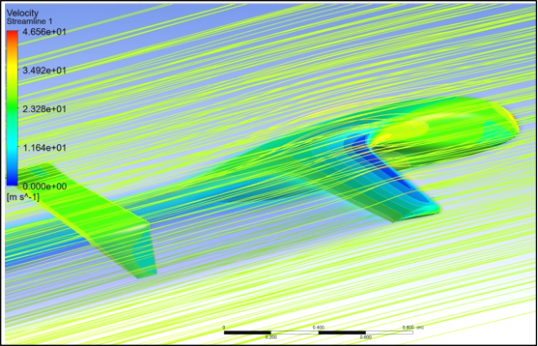
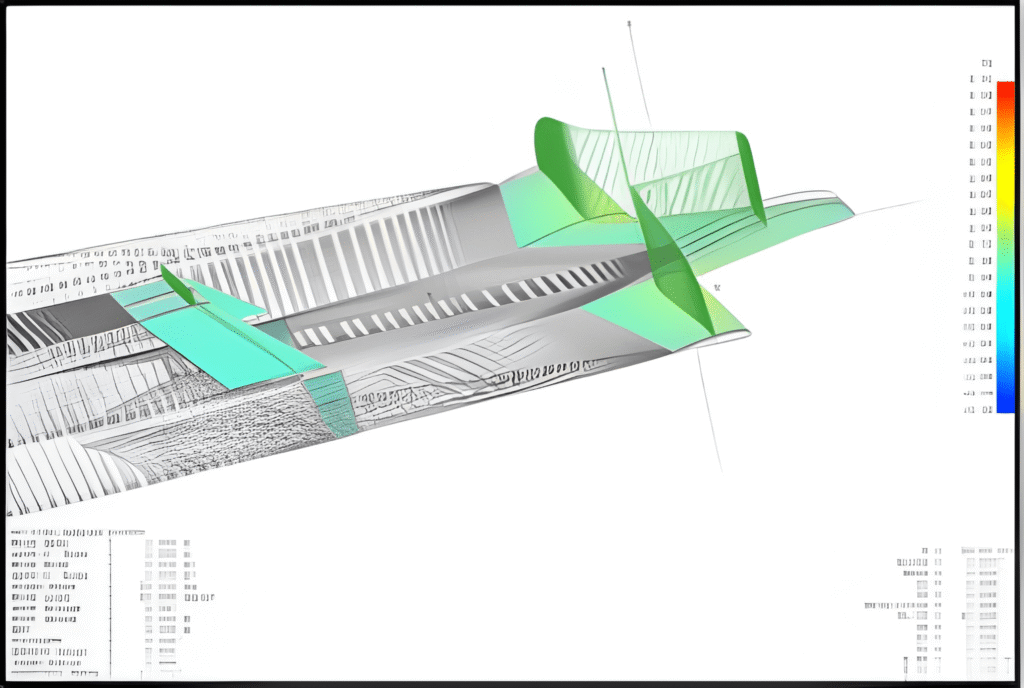
  • Study and Design: Aerodynamic optimization, performance analysis, and material selection
  • Prototype Construction: Application of composite materials (CFRP), 3D printing of components, and assembly of the tilt-rotor mechanism
  • Ground and Flight Testing: Evaluation of static characteristics, system functionality checks, and gradual transition to flight testing
  • Adaptation and Improvements: Continuous feedback from tests to enhance performance and reliability

Research in Propulsion & Energy Systems

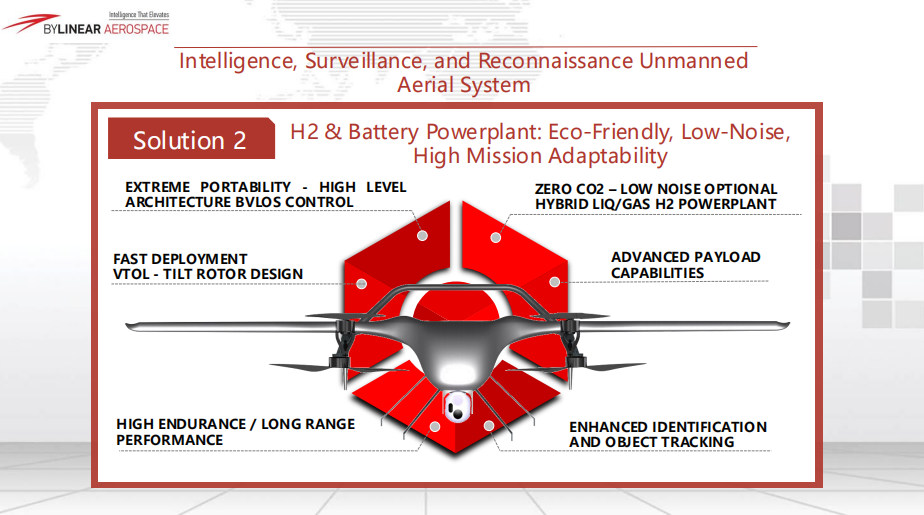
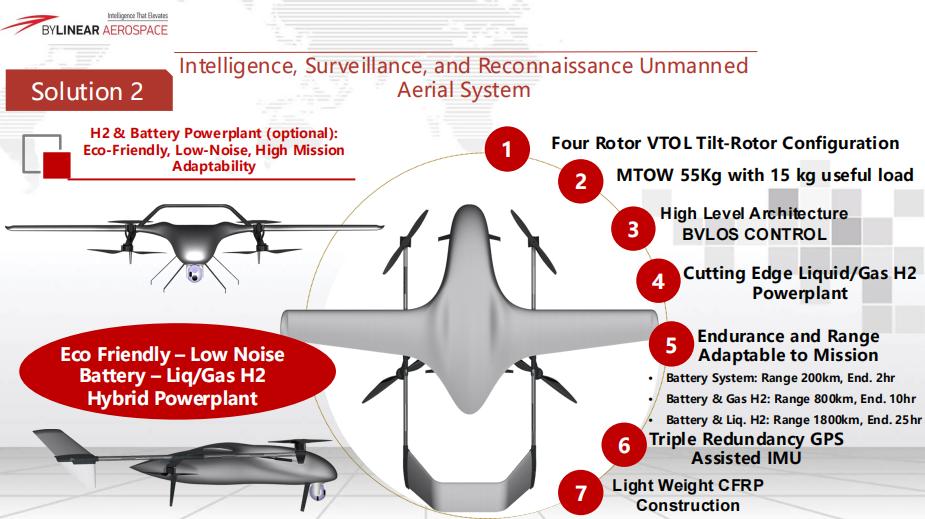
By Linear Aerospace develops and evolves advanced propulsion systems with the aim of optimizing autonomy, reducing acoustic and thermal footprint, and supporting long-duration missions.

Technological directions include:

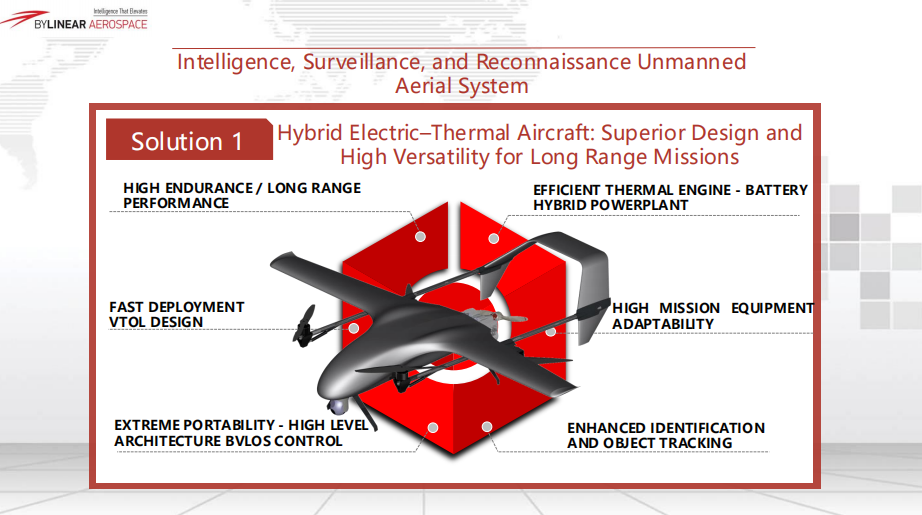
  • Hybrid thermal–electric propulsion systems

  • Low noise electrical configurations

  • Alternative low-emission energy solutions

ISR Architecture & Operational Systems

By Linear Aerospace’s system architectures focus on advanced ISR (Intelligence, Surveillance & Reconnaissance) data collection, integration and processing, through multi-sensor payloads and automated decision support processes.

Applications include:

  • Integration of EO/IR sensors, radar and specialized payloads

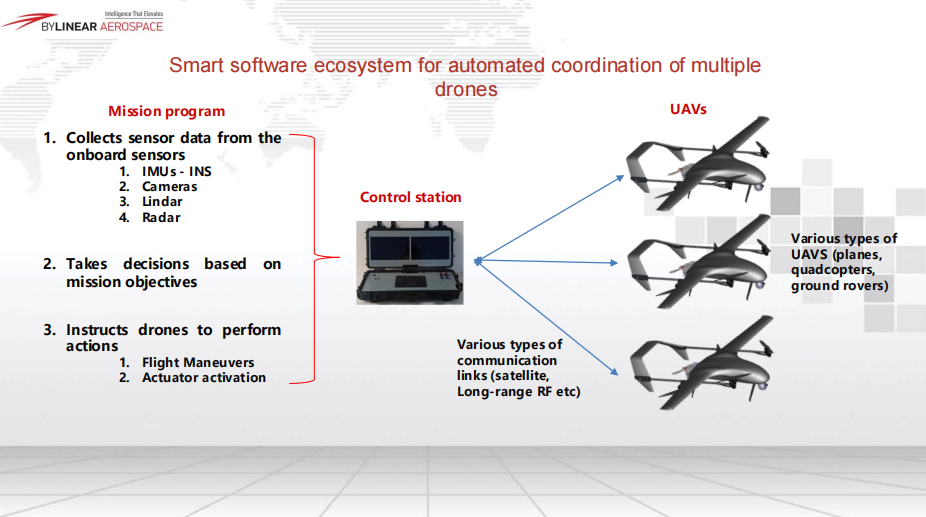
  • Mission management through integrated C2 architectures

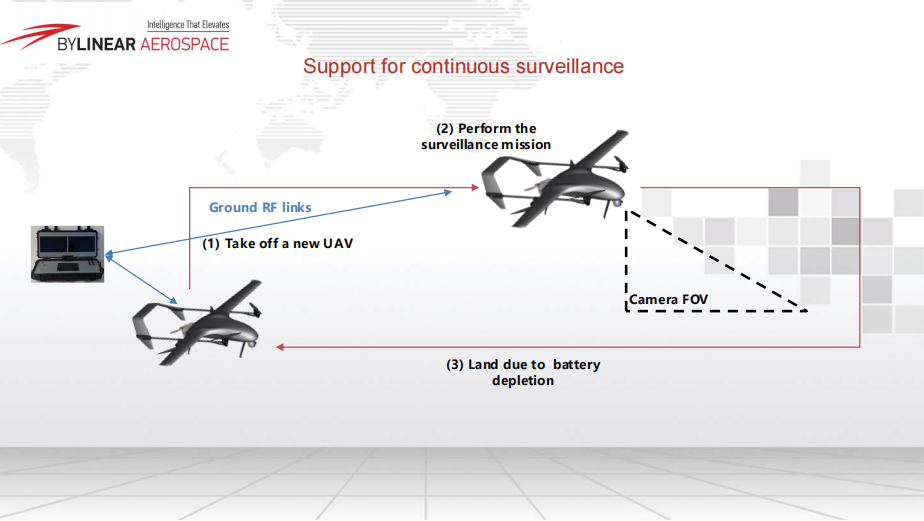
  • Supporting collaborative multi-UAV operations

Collaborative & Network-Centric Systems

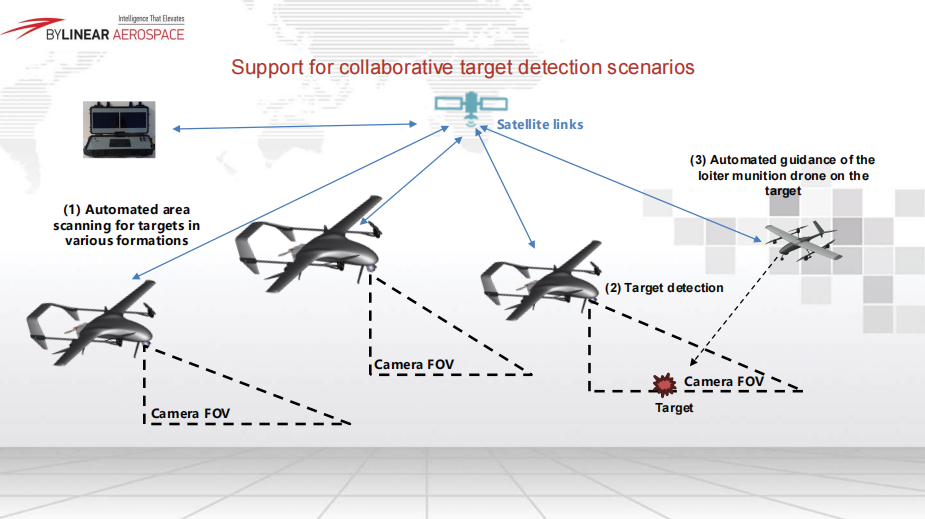
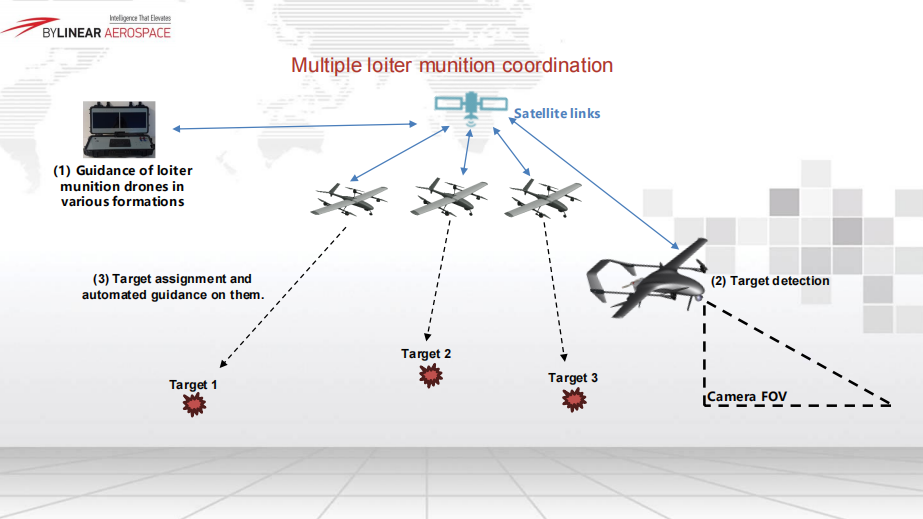
Within the framework of R&D, scenarios for the collaborative operation of multiple unmanned platforms are being developed, with the possibility of mission sharing, joint targeting and combined surveillance.

Applications include:

  • Coordinated area surveillance

  • Automatic goal assignment and management

  • Interconnection via satellite and RF communications

Environmental Responsibility & Sustainability

Environmental responsibility is a key pillar of By Linear Aerospace’s technological development, with an emphasis on reducing emissions, low operating noise and optimizing energy efficiency.

Our solutions aim to combine high operational performance with a reduced environmental footprint, in both military and civilian applications.

Development Note

The technologies, systems and configurations presented in this section concern evolving and applied R&D architectures and do not necessarily constitute stand-alone commercial offerings. Technical characteristics and configurations can be adapted according to operational requirements.

Scroll to Top